Column · @lanefence-installerfota025
Finest Fence Materials for Protection
Security fences are meant to really feel boring. The very best ones blend right into the landscape, do their work quietly, and make burglars pick a tougher target. But the truth is, good safety fencing is anything but simple. Wind, privacy demands, dirt conditions, pets, maintenance resistance, and neighborhood code all push you towards different products. After adequate installs, you start to identify patterns: people do not fail at fence because they picked a "poor" option, they fall short because they selected a material without appreciating how it will certainly act over time.
If you're employing a fence company or intending a project yourself, the objective coincides: quit informal invaders, sluggish motivated people, and make your building simpler to keep track of. Allow's go through the fence products that stand up best for protection, what they succeed, where they stun you, and how to decide without finishing up with a beautiful barrier that can be climbed, cut, or pressed over.
What "security" actually indicates for a fence
When home owners say "safety and security," they usually imagine something, a tall fencing that looks intimidating. Genuine safety is split. A fencing works best when it resolves 3 troubles simultaneously:
First, it produces physical resistance. That indicates strong posts, suitable panel strength, and a design that isn't simple to lift, reduce, or pry apart.
Second, it regulates access. Gates are typically the weakest link, and spaces at the bottom issue more than you 'd believe if you handle animals, landscaping crews, or curious kids.
Third, it enhances visibility. Also a high fencing is only practical if it doesn't produce blind edges where a person can approach undetected.
As you examine materials, keep those 3 work in mind. The "best" fence material is the one that toenails all three in your particular problems, not the one that wins a display room argument.
Chain web link: the sensible workhorse
Chain link is the fence you choose when you desire safety with minimal difficulty. It's not glamorous, yet it is effective, particularly around driveways, backyards, industrial residential or commercial properties, and large locations where you need consistent coverage.
With protection in mind, the secret is not simply the mesh. It's the entire system: galvanized cord quality, fence material tension, message spacing, and the equipment made use of at corners and gateways. Thicker cable and stronger messages decrease the "give" that an intruder seeks. A well-installed chain link fence can likewise be paired with personal privacy slats or barbed upgrades where lawful and appropriate.
One typical error I see is choosing thin cord since it's more affordable, after that expecting it to feel unmovable. Slim fabric can be much easier to reduce, and it can droop sooner if the installation isn't dialed in. Chain web link also has an aesthetic openness, which is wonderful for monitoring, yet you might still desire privacy. If your main problem is preventing theft while keeping an eye on the backyard, chain web link usually wins.
Trade-off smart, chain web link is also extremely straightforward concerning the demand for maintenance attention. Also galvanized product can show use at fence sides and stress factors. If you live where salt air or continuous dampness strikes hard, you will certainly desire a corrosion-resistant arrangement from the beginning and sensible assumptions regarding upkeep.
Wood: protection with the appropriate detailing
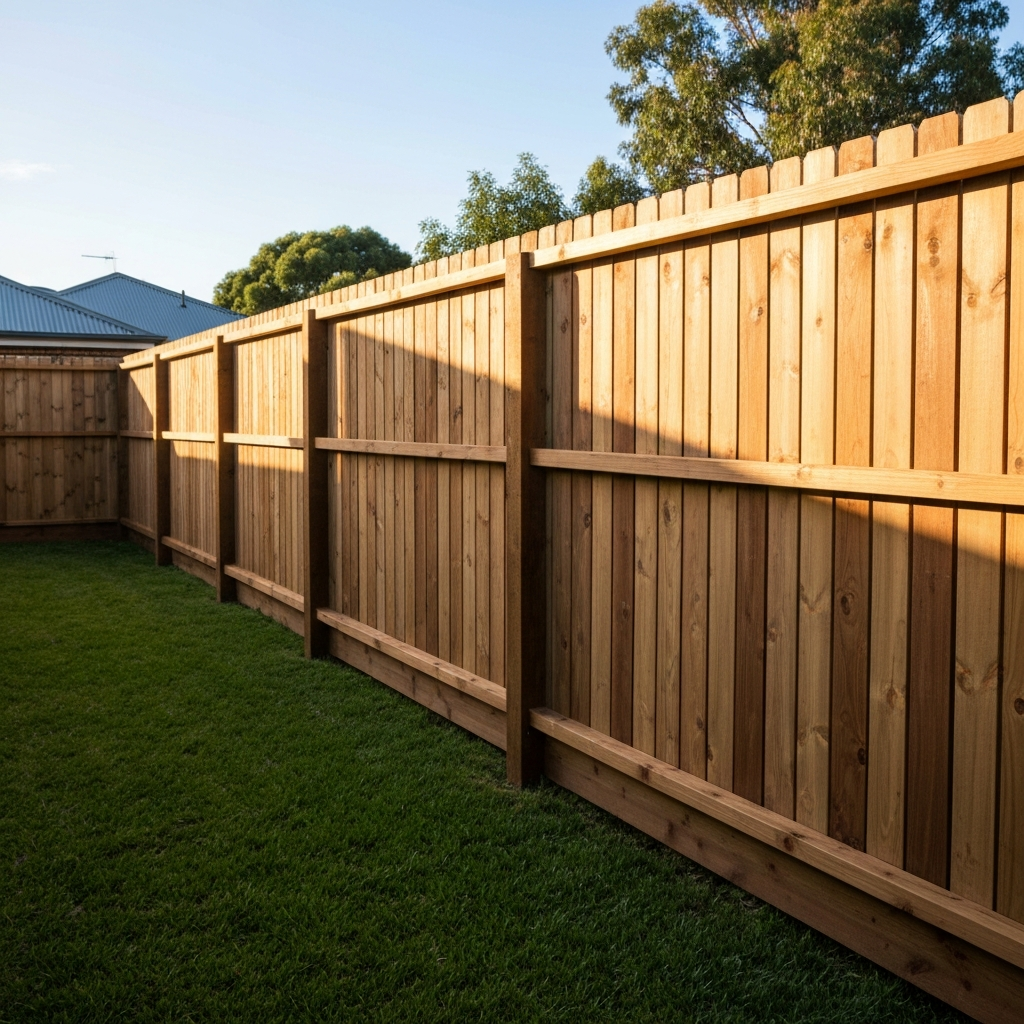
Wood fencings have a kind of rugged appeal, yet they are commonly misunderstood in a security conversation. A strong timber personal privacy fence can be very daunting to laid-back invaders due to the fact that it denies sight lines right into the yard. It can additionally really feel strong when built with appropriate framing and quality fasteners.
Where timber obtains challenging is in the information. Security isn't only regarding fencing elevation; it has to do with the structure behind the boards. A fencing developed with minimal supporting, loosened pickets, or hardware that doesn't manage wetness cycles can establish spaces, bowing, and weak points. Those are specifically the areas someone tests first.
If you opt for wood for safety and security, focus on:
- solid framework and proper blog post setup depth
- tight board alignment, with minimal spacing at prone points
- gate building that matches the strength of the rest of the fence
Pressure-treated lumber and top quality exterior-grade boards assist, however the actual distinction originates from handiwork. I've seen timber fences that look the same from the street, but one stays tight for many years, and the various other establishes wobbles within seasons. That "rigidity" is what a burglar really feels immediately.
There is also a maintenance side to be truthful about. Staining, sealing, or painting is not optional permanently. If you desire reduced upkeep, wood calls for a strategy. If you desire the cozy appearance and don't mind regular care, wood can be a solid protection selection, particularly when you incorporate it with good lighting and a solid gate lock system.
Vinyl and composite: strong personal privacy, minimal fuss
Vinyl fencing has grown in popularity because it's predictable. It will not rot, it does not splinter, and it resists the kind of wear that makes wood fences soften with time. For safety, vinyl's major advantage is that it holds shape much better when set up correctly. That matters because drooping and warping create take advantage of points.
Vinyl privacy designs can be really effective at restricting exposure, which reduces the "technique and range the scenario" window for a person trying to check your home. Several plastic systems use interlocking styles and stronger rails than basic ornamental styles, and those rails are what keep the panels rigid.
However, vinyl is not magic. Fencing safety still depends on message spacing and appropriate anchoring. If messages aren't set properly or eviction is developed with weaker equipment, you haven't gotten safety and security, you have actually acquired appearance. Likewise think about impact resistance. In areas with debris tornados, landscape design tools get in touch with, or children that treat every little thing like a play area, vinyl can show cracks or chips that you may not want to deal with.
Composite materials can share several of vinyl's benefits, depending upon the product. They tend to resist rot and can be helpful for lasting look. Still, composite stamina differs by supplier, so it deserves choosing brand names that have a clear track record for outside performance rather than going strictly by price.
If you desire a "set it and forget it" safety fencing, vinyl commonly fits the costs, specifically when your major objective is privacy plus deterrence as opposed to a fortress-like barrier.
Aluminum: the safety and security appearance with a lower maintenance promise
Aluminum secure fencing beings in a sweet spot for several house owners. It offers a specified perimeter, excellent presence for monitoring, and a clean appearance that does not require consistent staining.
For safety and security, light weight aluminum can be fairly effective when it utilizes solid rails and properly designed picket spacing. The open style is a plus if you have cam protection or you intend to keep view lines for your own security. Someone approaching in the evening still sees the limit, and you still see what's happening past it.
That stated, light weight aluminum is not naturally impervious. Its strength is in the framing and hardware. If you install aluminum with loosened blog posts, inadequate supporting, or weak gateway building and construction, it won't behave like the "strong obstacle" people picture from a brochure.
In practice, light weight aluminum tends to be a fantastic option when you desire safety and security hints, tracking, and weather resistance without the upkeep load of timber. It works particularly well for front lawns where you require compliance with visual appeals, and for side yards where visibility matters.
Steel and functioned iron: when you want the "severe" barrier
If you're checking out safety in a much more aggressive way, steel and functioned iron bring a different degree of intimidation. The very best variations are heavy, rigid, and hard to move. When people claim a fencing really feels "solid," it often boils down to steel mass, article depth, and entrance engineering.
Steel can be fabricated with variations that balance visibility and resistance. Some systems include ornamental aspects that still behave structurally, best fence company and others are developed for optimal protection with tighter spacing or reinforcement.
Wrought iron, specifically, has a timeless existence. It likewise permits layout flexibility while maintaining stamina. The large requirement is rust security. Powder finishing helps, and appropriate construction and setup issue, specifically around joints and gateway mechanisms. If you stay in a coastal atmosphere or near constant snow melt chemicals, the coating quality and maintenance plan end up being a big deal.
The one compromise that often shocks homeowners is price. Premium steel or iron is seldom the cheapest path. Yet if you have a building format where fencing toughness straight impacts your daily comfort, the investment can feel justified fast.
There's an additional refined variable: hard barriers can change interest to entrances and lock points. If your gateway is weaker than the fencing, a burglar will test eviction location first. That holds true across products, but it ends up being much more obvious with steel systems due to the fact that people think gates are durable. Make sure your gateway layout is crafted for the same tension, not simply for looks.
Picking the very best material for your security priorities
Security is not one-size-fits-all. A product that excels at deterring a casual border invader might not be optimal if your most significant danger is device accessibility, fence cutting, or duplicated attempts to compel a gate.
Here's a sensible way to match products to your top priorities:
- If you want border coverage with exposure and you're enhancing for tracking, chain web link or light weight aluminum commonly make the most sense. They work well around video cameras and illumination due to the fact that view lines stay open.
- If your goal is privacy plus prevention, timber and plastic can shine. They restrict method and searching, and they can make a burglar really feel exposed when they try to get close.
- If you desire optimal resistance and you're willing to spend for heavier building and construction, steel or functioned iron are the significant contenders.
But you still require to consider neighborhood conditions. Wind can emphasize tall panels. Soil conditions impact blog post stability. In some environments, continuous freeze-thaw cycles speed up equipment failing, also when the panel material appears resilient. The fencing's "system honesty" is what matters.
In my experience, the very best end results happen when the homeowner assumes in terms of the entire setting up, not simply the fence material. A strong fence company will chat with post deepness, article spacing, tensioning techniques for cord, rail thickness, and gate reinforcement. If they just talk about aesthetic appeals, you need to ask more questions.
The setting up information that choose whether a fencing really secures the property
It's easy to consume over the panel material and miss out on the parts that manage real toughness. Safety originates from the structure that holds the fence together over years of weather condition and abuse.
Consider these system-level variables that affect security performance across materials:
Post installation is whatever. A fencing can look thick and pricey, but if messages are set superficial or in poor backfill, the whole system can loosen. A burglar does not need to "damage" a fence to get, they simply require to locate weak movement points.
Corner and gateway building should have unique focus. These areas experience more pressure than straight runs. Many fences fall short at edges first since the hardware bends, rails loosen up, or the supporting technique is underbuilt.
Bottom spaces matter. If your fence leaves area along the ground, a person can crawl underneath, and pets can push via. Also if you're not fretted about individuals tunneling, spaces alter exactly how landscape design expands in and how promptly the fence becomes uneven.
Gates are the real examination. Gate joints, latches, and positioning make a decision whether the opening remains managed. certified fencing installers I've seen cases where the fence looked robust, but eviction lock was a very easy target, or the gate drooped enough to produce a controllable gap.
Material contrast for typical security goals
Instead of treating each fencing kind as a single item, I assume it's better to connect them to protection outcomes. Below is a fast, truthful map of what each material tends to do best, in normal household installations.
|Fence material|Protection toughness (typical)|Typical compromise||-- |-- |--|| Chain link|Good deterrence per buck, strong exposure|Much less personal privacy, requires top quality tensioning and posts|| Timber|Privacy and strong feel, obstructs view lines|Needs upkeep, can loosen if framing is weak|| Plastic|Maintains shape, reduced rot danger, privacy designs|Depends greatly on message and entrance hardware quality|| Aluminum|Visibility with specified border, deterioration resistance|Less "solid block" sensation than wood or steel|| Steel/ wrought iron|High strength, solid prevention|Higher expense, needs coating honesty and entrance engineering|
That last column is essential: compromises are not factors to prevent a product, they're warnings regarding where to invest attention.
If you want a fence that remains secure in genuine use, the "where to invest interest" point usually lands on gates, corners, and the user interface in between fencing and ground.
A few real-world circumstances (and what material I 'd favor)
I'll inform you three situations I have actually seen continuously, since they show how "ideal" modifications with context.
Scenario one is the backyard with fully grown landscaping and strong illumination on the home side, however a darker boundary line. People want personal privacy from neighbors and want to slow entry from the side entrance. Because configuration, a privacy-focused fence like wood or plastic can function extremely well due to the fact that it refutes sight lines while the house lighting manages tracking. The trick is to guarantee the gate is built with the very same toughness and that the bottom space is addressed.
Scenario 2 is a larger residential or commercial property with electronic cameras and a driveway path where exposure issues. Homeowners desire a clear border they can keep an eye on and control, and they don't want to keep hefty products frequently. Chain web link or light weight aluminum has a tendency to fit below. Their visibility supports video camera views and decreases the opportunities that somebody can come close to hidden. You're also less likely to regret it when you see how the fencing looks after a couple of seasons.
Scenario 3 includes repeated nuisance attempts, not always advanced invasion, yet sufficient to make everyone worried. This is where steel or functioned iron comes to be enticing, or where a sturdy gateway style makes a significant distinction. Occasionally the panels can be secondary to eviction and lock top quality, however the psychological effect of a stiff, substantial obstacle is genuine. People test limits by impulse, and metal commonly sends a clear message immediately.
Questions to ask your fence company prior to you commit
A respectable fence company ought to welcome these concerns. If they dodge them, that's a clue.
Ask concerning post depth and spacing, and whether they're adhering to a method that fits your dirt kind and fence height. Ask how they manage corner bracing and just how they engineer entrances so they won't droop. Ask what hardware they utilize for locks and pivots, and whether it's rated for the climate you're in. Ask just how they deal with lower voids and how they make certain the fencing stays directly over time.
If they respond with specifics, like the means they establish posts, the type of braces, or exactly how they manage tension in chain link, you remain in good shape. If they only discuss the aesthetic coating, you may be taking a gamble.
Also, check local rules. Elevation restrictions, exposure needs, and material restrictions can vary. Code conformity influences what you can build, which influences safety efficiency. A terrific fencing that you can not legally mount is just costly homework.
How to choose without getting caught by budget
Budget is genuine. Safety materials vary in cost, and installment labor typically dominates the complete expense, specifically with gates and bracing.
A common blunder is buying the most inexpensive panel material and costs nothing on the supporting framework. That method can backfire. The material may survive the weather, however a weak structure can still produce openings. If safety and security is the goal, you typically want to invest enough on the parts that stop motion: blog posts, rails, bracing, and gateway engineering.
Here's the method I would certainly focus on spending in most safety fence constructs:
- First, guarantee the fencing can stand up to wind and strain without loosening up. That comes from message depth, appropriate bracing, and proper hardware.
- Second, engineer the gate like it matters, since it does. A strong gateway lock and straightened frame are frequently more crucial than selecting between 2 similar panel types.
- Third, pick the panel product based upon your personal privacy and visibility needs, and your maintenance tolerance.
Your climate and way of living determine exactly how that priority order should move. If you're away frequently, keeping an eye on may matter more. If you have youngsters or family pets, lower spaces and gateway integrity come to be non-negotiable.
Quick safety develop list prior to install
Use this as a quick peace of mind check. If you can answer these well, you're most likely getting genuine safety instead of a fencing that looks hard however acts loose.
- Confirm blog post depth and spacing match your fence height and regional conditions.
- Make gateway reinforcement and latch hardware a stated part of the scope.
- Address lower clearance so there are no purposeful crawl-through gaps.
- Use appropriate rust protection based upon your climate, especially for metal.
- Plan for upkeep access, also if the material is "low upkeep."
That list alone can save you from one of the most usual security frustrations, the ones that appear after the initial tornado, the initial difficult winter, or the first season of settling.
Maintenance facts that impact long-term security
A protection fence is only comparable to its condition. Maintenance isn't almost appearances, it's about structural integrity.
Wood needs interest because dampness is a continuous. Loose boards come to be entrance factors. Buckling can develop gaps, and equipment corrosion can damage lock efficiency. Plastic typically needs much less, however influence damages still occurs, and little splits can end up being bigger gradually otherwise addressed.
Metal fences require focus to layers and joints. If you scrape with a powder finishing, rust can start at a seam. Chain link can develop sag if it sheds stress or if messages clear up. When chain link begins to look uneven, it commonly indicates that the tension system or blog post security requires correction.
In all instances, the best maintenance is early. If you notice a fence leaning a few degrees, or a gate that drags in different ways, do not wait for it to end up being a fixing project. Tightening up and adjustment early can avoid a full replacement later.
Where design really matters for security
Style might feel shallow, but it affects safety. For instance, privacy fencing styles obstruct view lines, which can prevent casual trespassers. The exact same personal privacy can be a downside if you rely on electronic cameras or you want a clear sight for lighting control.
Open picket styles like light weight aluminum can enhance surveillance, but they additionally produce visual access. Some property owners resolve that by combining open fencings with landscape design that does not block exposure near video cameras and entrances.
For chain link, privacy slats can enhance deterrence and reduce presence. Just bear in mind that slats can also produce wind resistance. That can matter in high wind locations, where the fence's stress and message stamina need to take care of the added load.
Security secure fencing is like route style. The very best results come when you craft the experience from several angles, not when you count on one dramatic feature.
So, what's the very best fencing product for security?
If you required me to select a response without details, I would certainly claim the "finest" safety and security result comes from matching material toughness to your gate engineering, article system, and your surveillance needs.
If you want presence and perimeter control with reliable efficiency, chain web link and light weight aluminum are usually the most practical victors. If you want privacy-based deterrence and you're planned for periodic maintenance, wood and plastic can be excellent. If you desire a hefty, inflexible obstacle and you're concentrated on optimum resistance, steel or functioned iron usually supplies the best impression and one of the most stubborn obstacle behavior.
The actual key is not the product tag. It's the fence company you employ and the level of care they apply to the setting up. A top-tier chain web link setup can surpass a badly constructed metal privacy fence. A well-framed wood fencing with tight entrance positioning can be much more safe than a decorative light weight aluminum task with loose bracing.
Security is not a guess. It's a system you can inspect prior to you ever pay the last invoice.
If you're planning your job, inform your fence company your main hazard and your top priorities, privacy versus exposure, and just how you use your lawn day to day. Then ask what they're doing structurally to deal with access factors. When those solutions are specific, you can feel great you're constructing a perimeter that really protects, not just one that looks secure from a distance.